
Non-Medical · Strength · Balance · Recovery
Mobility And Rehabilitation Support for Seniors at Home
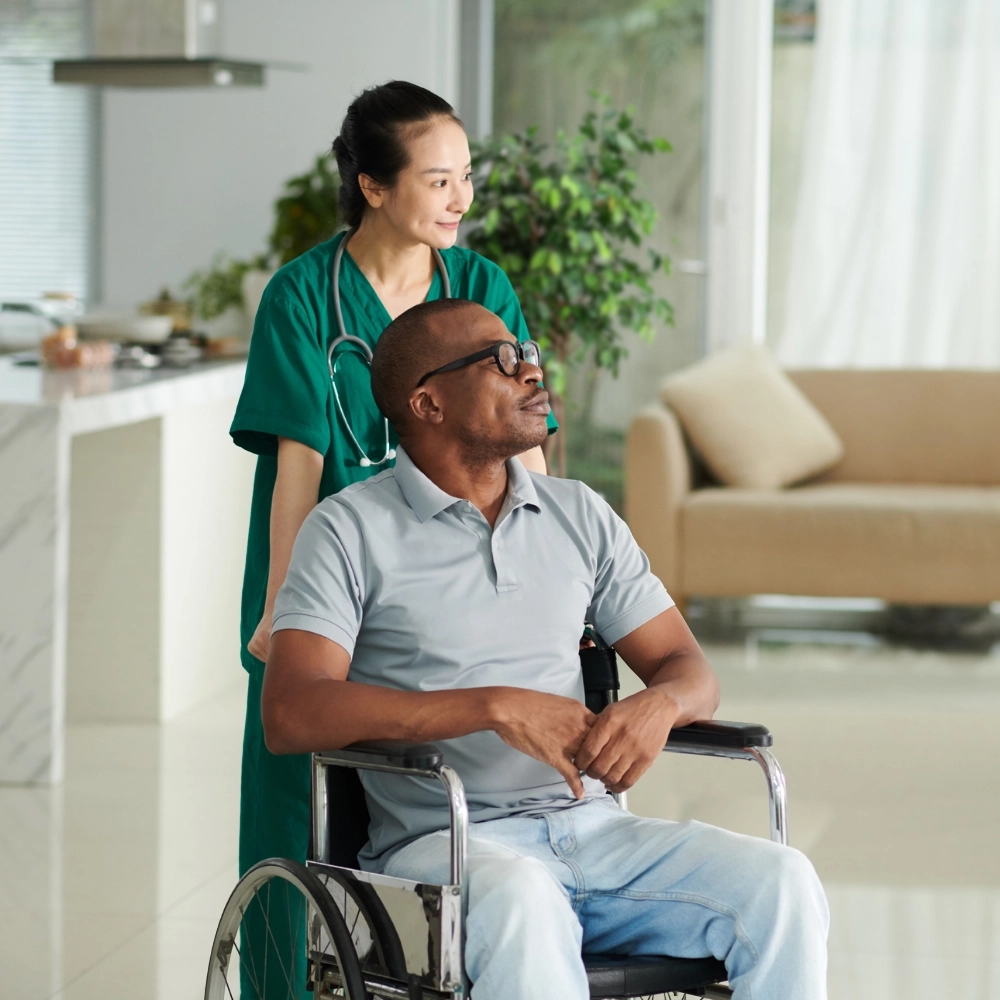
Mobility and rehabilitation support helps seniors regain strength, improve balance, and move safely while maintaining independence at home. Trained caregivers provide structured, hands-on assistance tailored to each individual’s physical condition and recovery goals.
What It Is
What Is Mobility and Rehabilitation Support?
Non-Medical Mobility & Recovery Assistance. Mobility and rehabilitation support is professional, non-medical assistance focused on improving movement, strength, and physical stability. It supports seniors who experience difficulty walking, transferring, balancing, or recovering after surgery or illness.
The goal is to improve confidence, reduce fall risks, and promote physical independence safely — all in the comfort of home.
Focused on Strength, Stability, and Safe Movement—This service prioritizes:
24/7 Safety Monitoring
Transfer safety
Balance improvement
Strength-building support
Fall prevention
Therapy reinforcement
It is structured physical support — not medical treatment — designed to enhance daily mobility.
How It Differs from Personal Care
Personal care focuses on hygiene tasks like bathing and dressing. Mobility and rehabilitation support specifically targets movement, strength, balance, and recovery-related activities—a distinct and complementary area of care.
How It Differs from Skilled Therapy
Licensed physical or occupational therapists create clinical treatment plans. Our caregivers assist by reinforcing prescribed exercises and supporting safe daily mobility routines—without providing medical therapy.
Who Benefits
Who Benefits from Mobility and Rehabilitation Support?
Structured support benefits a wide range of seniors — from those recovering from surgery to those managing chronic conditions affecting daily movement.
Seniors with Limited Mobility
If walking or standing feels unstable, structured assistance improves safety and restores confidence in everyday movement.
Individuals Recovering from Surgery
Post-surgical recovery requires guided movement and safe transfers to prevent complications and support a full recovery at home.
Adults Managing Chronic Conditions
Conditions like arthritis, Parkinson’s disease, stroke recovery, or joint replacement often require ongoing mobility and balance support.
Seniors at Risk of Falls
Balance challenges increase fall risk significantly. Proactive mobility assistance and structured exercises reduce the chance of injury.
Families Seeking Recovery Support
When families need professional help supporting rehabilitation routines at home, this service provides structured care and complete reassurance that their loved one is moving safely and progressing confidently.
According to the CDC, regular mobility support and balance training help reduce fall risks in older adults—making proactive mobility care essential for senior safety and independence.
6 Services included:
Walking Assistance
Transfer Support
Physical Therapy Support
Occupational Therapy
Strength & Balance
Fall Risk Assessment
What’s Included
What’s Included in Our Mobility & Rehabilitation Support
Six structured areas of mobility and rehabilitation assistance — all delivered by trained caregivers to help seniors move confidently, safely, and independently every day.
Walking Assistance
Structured hands-on support to improve stability, confidence, and walking endurance
Walking Assistance provides structured, hands-on support to improve stability and build confidence in daily movement. Supervised walking both inside and outside the home helps seniors gradually regain strength and independence safely.
Caregivers Assist With
Benefits
Transfer Support
Safe transitions between bed, chair, wheelchair, and bathroom
Safe transitions prevent injuries and build confidence in daily movement. Caregivers use proper technique to ensure every transfer is done safely — protecting both the resident and the caregiver throughout the process.
Support Includes
Benefits
Physical Therapy Support
Reinforcing licensed therapist plans through guided exercises and safe routines
While licensed therapists create treatment plans, caregivers assist with the safe execution of prescribed exercises at home. This ensures consistency between clinical sessions and daily routines—accelerating recovery and building lasting strength.
Care Includes
Benefits
Occupational Therapy Assistance
Supporting functional independence through adaptive techniques and daily skill reinforcement
Occupational therapy focuses on daily task performance. Caregivers reinforce recommended adaptive techniques to help seniors perform everyday activities more safely, confidently, and independently at home.
Assistance Includes
Benefits
Strength & Balance Exercises
Building stability, muscle tone, and coordination to reduce fall risk
Targeted strength and balance exercises improve muscle tone, coordination, and overall physical stability. Regular exercise support reduces the likelihood of falls and helps seniors maintain strong, functional movement as they age.
Caregivers Support
Benefits
Fall Risk Assessment
Identifying physical and environmental factors to prevent injuries proactively
A fall risk assessment evaluates both physical abilities and environmental factors that may increase injury risk. Early identification allows for immediate, proactive prevention strategies before accidents occur.
Assessment Includes
Benefits
How It Works
How Our Mobility & Rehabilitation Support Works
A simple, structured 4-step process from the initial mobility assessment through ongoing progress monitoring — all guided by trained caregivers.
1
Initial Mobility Assessment
We evaluate walking ability, balance concerns, physical limitations, and recovery goals to build a complete picture of needs.
2
Customized Support Plan
A structured mobility plan is created based on current condition, physician instructions, and individual rehabilitation needs.
3
Caregiver Matching
We match caregivers experienced in mobility assistance and rehabilitation support to ensure the best fit for each resident.
4
Ongoing Monitoring & Adjustments
Progress is tracked regularly, and the support plan is adjusted as strength, mobility, and recovery goals evolve.
Need help improving mobility safely at home?
Why Families Choose Us
Why Families Choose Professional Mobility Support
Professional mobility support isn’t just about safety — it’s about restoring confidence, independence, and quality of life for seniors recovering or managing physical challenges at home.
Restoring Independence
Improved mobility allows seniors to maintain control over daily life and stay active at home longer.
Reducing Fall Risks
Structured assistance significantly lowers injury risk — CDC data shows balance training helps reduce falls in older adults.
Supporting Recovery at Home
Rehabilitation continues safely outside clinical settings — in the comfort of the resident’s own home environment.
Preventing Hospital Readmissions
Consistent mobility support reduces complications, setbacks, and the likelihood of unnecessary readmission.
Expert
Trained Mobility
Caregivers
Caregivers
Why Families Trust Us
Why Families Trust Life1 Care Home LLC
At Life1 Care Home LLC, mobility support is delivered by caregivers trained in safe transfer techniques, fall prevention, and rehabilitation reinforcement — with transparent communication and flexible care schedules built around your loved one’s specific needs.
Experienced & Trained Caregivers
Our caregivers are trained in safe transfer techniques, mobility assistance, and rehabilitation support protocols.
Background-Checked & Insured
Safety and reliability are always prioritized — all caregivers are fully background-checked before placement.
Transparent Communication
Families receive regular updates regarding mobility progress, exercise adherence, and any care plan adjustments.
Flexible Scheduling Options
Hourly, part-time, or full-time care schedules are available — based entirely on individual recovery needs and goals.
Your Questions Answered
Your Questions Answered
Is this service medical therapy?
No. We support mobility and reinforce prescribed exercises but do not provide licensed medical therapy. Caregivers assist with safe execution of therapist-prescribed routines only.
How often should mobility support be scheduled?
Frequency depends on the individual’s condition, recovery goals, and physician recommendations. We discuss this during the initial consultation and care plan development.
Can services be temporary?
Yes. Many clients use this service during post-surgery recovery and discontinue once full mobility is restored. Care duration is completely flexible.
How soon can services begin?
In many cases, care can start within a few days after the initial mobility assessment and personalized care plan are completed.
Get Professional Mobility & Rehabilitation Support Today
When movement becomes challenging, the right support restores confidence and independence safely at home. Life1 Care Home LLC is here to help your loved one move better, feel stronger, and live more confidently every day.