
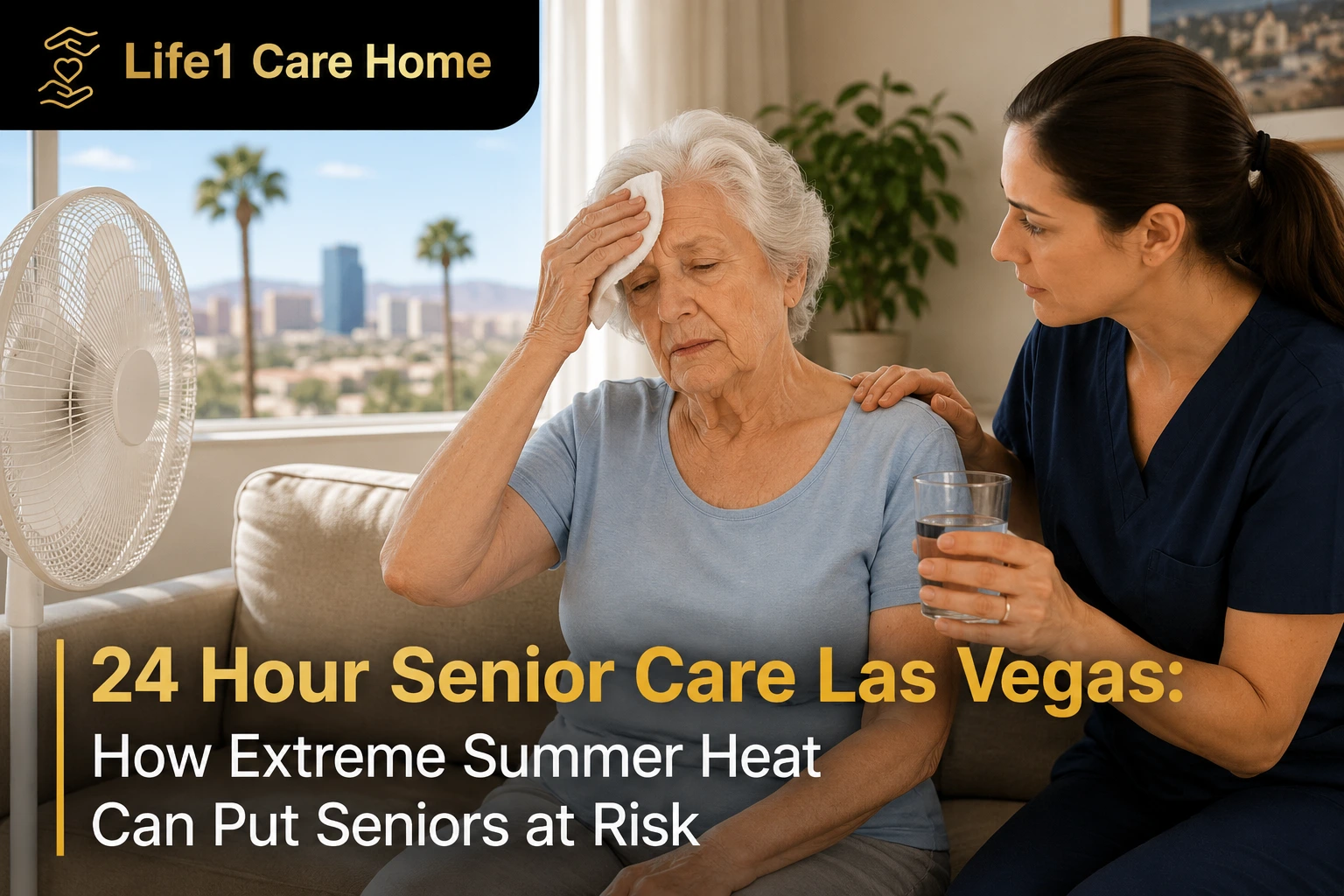
Living in the desert offers beautiful sunsets and vibrant culture, but the intense Las Vegas summer heat presents a serious challenge for our aging population. As temperatures climb, the risk of heat-related illness increases significantly for those who are vulnerable.
Prioritizing senior heat safety is essential during these scorching months. Without proper precautions, even a short time outdoors can lead to dangerous health complications. Ensuring senior wellness in Las Vegas requires a proactive approach to hydration, cooling, and monitoring.
Families often find peace of mind with professional 24 Hour Senior Care Las Vegas and in-home solutions. At Life1 Care Home, our caregivers are trained in local heat-safety protocols and offer 24/7 monitoring, personalized care services, and hands-on support so your loved one can stay safe and comfortable. Learn more about our group homes in Las Vegas on our homepage or contact us to schedule a free assessment.
Table of Contents
Key Takeaways
- Extreme desert temperatures pose a high risk for elderly residents.
- Proactive monitoring is vital for maintaining health during peak summer months.
- Hydration and climate-controlled environments are the first lines of defense.
- Professional support ensures that safety protocols are followed consistently.
- Expert assistance helps families manage the unique challenges of the desert environment.
The Unique Challenges of Las Vegas Heat for Seniors
When the mercury rises in the Mojave Desert, older adults face challenges that are often invisible until it is too late. The intense Las Vegas summer heat can turn routine tasks into risky activities for seniors with limited reserves. Understanding both the physiological and environmental drivers of that risk helps families and home care teams take the right precautions.
Physiological Changes in Aging Adults
As people age, their bodies change in ways that affect temperature regulation. Aging and heat sensitivity are connected because mechanisms like sweating and blood-vessel dilation become less efficient. That means seniors may struggle to keep a stable core temperature during prolonged heat exposure.
Reduced Thermoregulation Efficiency
Thermoregulation in aging declines for many adults: decreased sweat production and slower circulatory responses make it harder to shed excess heat. Older adults may not feel overheated until they develop clear symptoms of heat-related illness in seniors. For medical guidance on recognizing heat illness, reference the CDC’s page on heat and older adults.
The Impact of Chronic Health Conditions
Chronic conditions common in older adults — such as heart disease, diabetes, and kidney disease — can blunt the body’s heat response. Certain medications (for example, some diuretics, anticholinergics, and beta-blockers) also increase vulnerability by affecting hydration or sweating. Always consult a physician or pharmacist about medication-specific heat risks.
- Reduced thirst sensation, increasing dehydration risk.
- Lower sweat output, reducing natural cooling.
- Medication side effects that exacerbate heat sensitivity — check with a clinician for guidance.
Who is most at risk
- Frail seniors and adults with mobility limits.
- People with multiple chronic conditions or complex medication regimens.
- Seniors living alone or without regular supervision.
Environmental Factors in the Mojave Desert
The Mojave Desert climate risks are shaped by very high daytime highs and the unique topography of the Las Vegas Valley. Dry air accelerates fluid loss and can mask the feeling of sweat; without frequent hydration, older adults can deteriorate quickly.
Understanding the Urban Heat Island Effect
The urban heat island effect amplifies nighttime temperatures: concrete and asphalt store heat all day and release it slowly after sunset, preventing cooling that might otherwise allow the body to recover overnight. For local guidance on heat and cooling resources, see the Southern Nevada Health District’s Beat the Heat Southern Nevada program.
| Factor | Impact on Seniors | Typical Risk Level |
| High Daytime Temps | Rapid fluid loss & higher core temperature | High |
| Urban Heat Island | Poor nighttime cooling; no overnight recovery | Critical |
| Arid Humidity | Evaporation masked; sweat less effective | Moderate |
By acknowledging these biological and environmental factors, families and in-home care providers can take a proactive approach to protecting seniors from extreme heat. Awareness, hydration, and the support of trained caregivers are key to keeping your loved one safe during the hottest months.
Why 24 Hour Senior Care Las Vegas is Essential During Summer
Providing 24 Hour Senior Care Las Vegas gives families vital peace of mind when summer temperatures spike. In a desert climate, a proactive approach is required to keep aging adults safe and comfortable; professional home care teams provide constant oversight, rapid assistance, and the environmental controls that reduce heat-related risk.
Constant Monitoring for Early Warning Signs
Continuous oversight is the cornerstone of elderly heat stroke prevention. Trained caregivers can spot subtle behavior or physical changes — excessive fatigue, dizziness, confusion, or altered cognition — that may indicate heat stress. Early recognition lets a caregiver intervene before a situation becomes a medical emergency, providing timely cooling, fluids, and, if needed, medical escalation.
Identifying Dehydration and Heat Exhaustion
Recognizing heat exhaustion symptoms early is essential for effective intervention. Preventing dehydration in elderly residents is a primary focus: caregivers follow scheduled fluid offerings, monitor intake, and watch for cues like dry mouth, decreased urine output, or lethargy. If you have medication concerns, ask your loved one’s prescriber how heat may interact with existing prescriptions.
Maintaining a Climate-Controlled Environment
A climate-controlled senior living space is non-negotiable during a Las Vegas summer. Beyond simply lowering temperatures, well-managed indoor environments keep humidity balanced and indoor air quality high so seniors can maintain daily routines without the physical strain of outdoor heat spikes.
Managing HVAC Systems and Indoor Air Quality
Regular HVAC maintenance and air-filter checks reduce the risk of unexpected breakdowns during heatwaves. Caregivers and home care teams coordinate system checks, ensure comfortable thermostat settings consistent with public-health guidance, and arrange rapid repairs when needed to protect residents’ respiratory health and comfort.
Medication Management and Heat Sensitivity
Effective medication management for seniors matters more in extreme heat. Certain prescriptions can increase heat sensitivity or dehydration risk. Professional caregivers track medications, document side effects, and communicate with clinicians to adjust routines or monitoring as needed, helping keep each person safe throughout hot days and nights.
Example 24/7 Care Plan Checklist
- Regular hydration schedule and hydration log kept by caregivers.
- Frequent cooling checks and comfort rounds throughout the day and night.
- Medication review and coordination with prescribers for heat-related risks.
- Routine HVAC/indoor air quality checks and an emergency repair contact.
- Personalized emergency response steps tailored to the senior’s needs.
At Life1 Care Home, our local team works with families to create individualized care plans that combine compassionate companionship with practical health-safety measures. To learn about our group homes in Las Vegas and 24/7 in-home care options, visit our homepage or contact us to schedule a free consultation.
Proactive Safety Measures for Heat-Related Illness
Taking charge of senior heat safety involves more than staying indoors; it requires a clear, consistent plan. With simple habits and the support of trained caregivers, families and home care teams can significantly reduce the risk of heat-related medical emergencies during the hottest months.
Hydration Strategies for Seniors
Proper fluid intake is the first line of defense against heat-related illness in seniors. Because the natural thirst response often weakens with age, caregivers should proactively offer fluids on a schedule rather than waiting for a senior to ask.
Monitoring Fluid Intake and Electrolyte Balance
To support preventing dehydration in elderly people, caregivers should track daily consumption and provide a mix of hydrating options. For medical guidance on electrolytes and fluids, consult a clinician or the CDC’s heat and health resources.
- Keep a hydration log to record daily intake and any signs of reduced urine output.
- Offer small, frequent sips (water, herbal teas, or clinician-recommended electrolyte drinks).
- Include water-rich foods like watermelon, cucumbers, and oranges in meals and snacks.
- Consult the senior’s physician about electrolyte supplements if they take medications that affect hydration.
Optimizing Daily Routines
Adjusting schedules helps with elderly heat stroke prevention. Move errands, exercise, and outdoor visits to cooler parts of the day so seniors spend minimal time in peak heat.
Scheduling Outdoor Activities During Cooler Hours
Plan safe summer activities for seniors in the early morning or late evening when temperatures and UV exposure are lower. The Southern Nevada Health District offers specific local recommendations for off-peak hours.
Consistency in daily routines helps the body maintain a stable internal temperature and reduces stress during heat waves.
Emergency Preparedness and Response
Even with precautions, heat emergencies can occur. A written rapid response plan ensures caregivers act quickly and confidently if signs of heat exhaustion or heat stroke appear.
Creating a Rapid Response Plan for Heat Emergencies
Every household and care team should have an accessible plan that includes emergency contacts, a current medication list, and clear, step-by-step actions.
- Move the person to a cool area and remove excess clothing.
- Begin active cooling: apply cool, wet compresses and offer small sips of cool fluids if the person is conscious and able to swallow.
- Call 911 immediately for altered mental status, fainting, or seizure, or if the person is not responding to cooling measures.
- Keep a “go-bag” with essential medical records, a medication list, and bottled water available for emergencies.
- Set up a buddy system or scheduled check-ins for seniors living alone during heat waves.
For a personalized heat-safety plan and assistance, Life1 Care Home can help create an individualized care plan tailored to your loved one’s needs. Contact us to request a downloadable heat-safety checklist and schedule a free consultation.
Conclusion
The desert’s intense conditions make proactive health management especially important. Consistent hydration, climate control, and an individualized care plan form the foundation of senior wellness in Las Vegas, helping families catch risks early and keep their loved ones comfortable.
To discuss personalized 24/7 care options, contact Life1 Care Home. Our local team can build a custom plan that fits your family’s needs. Learn more about our group homes in Las Vegas on our homepage.
FAQ
Why is 24 Hour Senior care in Las Vegas recommended during peak summer?
Extreme Mojave Desert heat can cause hyperthermia or heat stroke quickly, so having a trained professional monitor conditions around the clock keeps seniors safer. Southern Nevada Health District
How does the Urban Heat Island effect impact seniors in Las Vegas?
City surfaces trap daytime heat and release it slowly at night, preventing the overnight cooling older adults’ bodies need to recover from heat exposure.
What early warning signs of heat exhaustion do caregivers watch for?
Heavy sweating, rapid pulse, dizziness, nausea, confusion, or reduced urine output, caregivers act on these signs before they escalate.
Why is medication management critical for senior heat safety?
Many prescriptions increase heat sensitivity or dehydration risk, so caregivers track medications closely and coordinate with clinicians to adjust monitoring.
How can Life1 Care Home help my loved one this summer?
We build tailored 24/7 care plans covering hydration, medication review, and HVAC monitoring. Contact our office for a free safety assessment.
Still Comparing Care Options? We’re Here to Help
Finding the right care for someone you love doesn’t have to be overwhelming. Our team is happy to answer your questions, explain your options, and help you determine whether a family-style residential care home is the best fit for your loved one.
Get in Touch
📍 Location: 4075 Alto Avenue, Las Vegas, Nevada 89115
📞 Phone: 248-636-6220
📧 Email: life1carehome@gmail.com